
Aug
The digital beauty space is characterized by a relentless, fast-moving cycle of viral trends. Every month, social media algorithms promote new ingredients, exotic botanical extracts, and complex multi-step hair routines that promise revolutionary results. While these trend-dependent products occasionally capture short-term retail interest, savvy business owners operating in the textured hair market understand a fundamental truth: the foundational economic engine of a beauty supply store relies on the consistent, high-volume turnover of classic heritage moisture lines.
For Type 3 and Type 4 hair profiles, moisture retention is not an aesthetic preference; it is a structural health requirement. Coily and curly hair textures are naturally vulnerable to dryness and environmental moisture loss due to the physical shape of the hair strand, which prevents the scalp’s natural sebum from traveling efficiently down the hair shaft. While trends fade, the daily consumer necessity for deep, occlusive conditioning remains absolute. For wholesale operations, stocking time-tested heritage lines like Doo Gro, Luster’s, and Blue Magic represents a steady, recession-proof strategy that guarantees predictable, high-volume retail reorders.
The Structural Science of Textured Hair and Porosity
To understand why classic hair vitalizers and pomades remain completely irreplaceable, one must examine the biological architecture of textured hair, specifically focusing on the concept of hair porosity. Porosity refers to the hair cuticle’s ability to absorb and retain moisture.
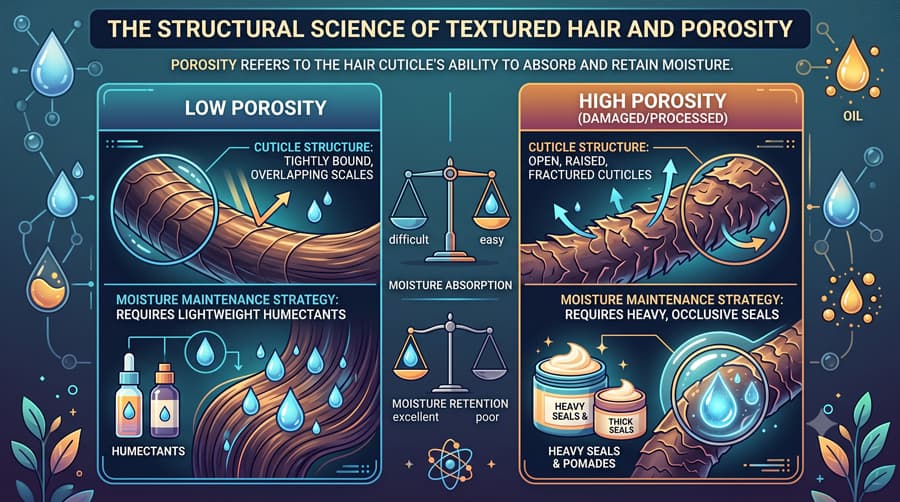
Many consumers with highly textured or chemically processed hair suffer from high porosity. The outer cuticle scales are raised or fractured, meaning that while the hair can easily absorb water, it loses that water almost instantly via evaporation to the dry surrounding air. Lightweight, water-based lotions or fine aerosol mists cannot fix this issue on their own; they evaporate too rapidly, leaving the hair shaft brittle, stiff, and highly prone to split ends and breakage.
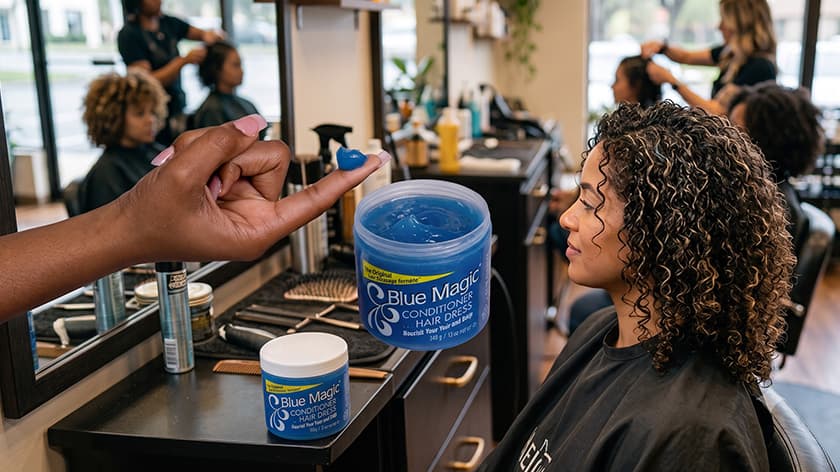
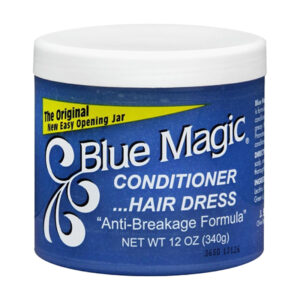
Heritage hair vitalizers address this structural challenge by leveraging heavy, highly effective occlusive agents like premium petrolatum, lanolin, and pure mineral oils. When a product like Blue Magic Hair Conditioner or Luster’s S-Curl Activator is applied to damp hair, it forms a rich, continuous, hydrophobic barrier over the hair shaft. This microscopic seal locks the water molecules securely inside the cortex, smoothing down the raised cuticle scales and providing long-lasting flexibility and elasticity.
The Growth and Thickening Phenomenon: Sourcing What Works
Within the wholesale distribution landscape, product categories associated with hair growth and thickening consistently achieve some of the highest inventory turnover velocities. Consumers managing thinning edges, tension damage from heavy installations, or general breakage are intensely loyal to brands that deliver visible, tangible structural support.
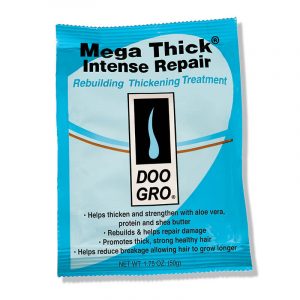
Lines like Doo Gro (such as their Mega Thick and Anti-Thinning Growth Oils) have maintained market dominance for decades because their formulas are explicitly designed to address the root causes of hair breakage. Rather than relying on speculative marketing claims, these heritage products are heavily infused with proven hair-strengthening agents like biotin, pure castor oil, sulfur compounds, and natural herbal complexes.
By deeply lubricating the scalp and reinforcing the hair’s keratin structure, they minimize mechanical breakage during daily combing and styling. For a beauty supply store owner, ensuring these growth-centric items are prominently displayed is a guaranteed method for capturing consistent, non-seasonal retail sales.
Wholesale Advantage: Low Cost, High Turnover, and Global Loyalty
From an inventory management and cash flow perspective, heritage moisture lines offer immense operational advantages to wholesale distributors and independent retailers alike.
- Low Cost of Acquisition: Unlike high-end clinical hair brands that require massive manufacturing overhead and expensive custom glass packaging, heritage lines utilize simple, cost-effective, high-volume packaging. This allows wholesale platforms to offer exceptionally competitive bulk pricing while preserving excellent profit margins for the retail store owner.
- Deep Generational Loyalty: These products benefit from a powerful cultural factor: generational trust. Grandmothers, mothers, and stylists have passed these specific jars down through families for decades because they are universally trusted to perform. They require no expensive marketing campaigns or digital ad spend to move off the shelves; their reputation precedes them.
Maximizing the Backbar and Retail Rack Alignment
To help your B2B clients maximize their profitability, advise them to maintain clear categorization between salon “backbar” sizes and standard consumer retail jars. Salons consuming large quantities of moisture treatments for deep-conditioning services require bulk tubs (12oz to 32oz), which should be sold at tiered volume pricing.
Meanwhile, retail shelves should feature standard sizes cross-merchandised directly alongside daily cleansing shampoos and detangling conditioners. By keeping these time-tested, high-volume foundational lines consistently available and aggressively priced in your wholesale catalog, you secure the high-turnover anchor that stabilizes your business’s monthly revenue.